L‘humour with another perspective

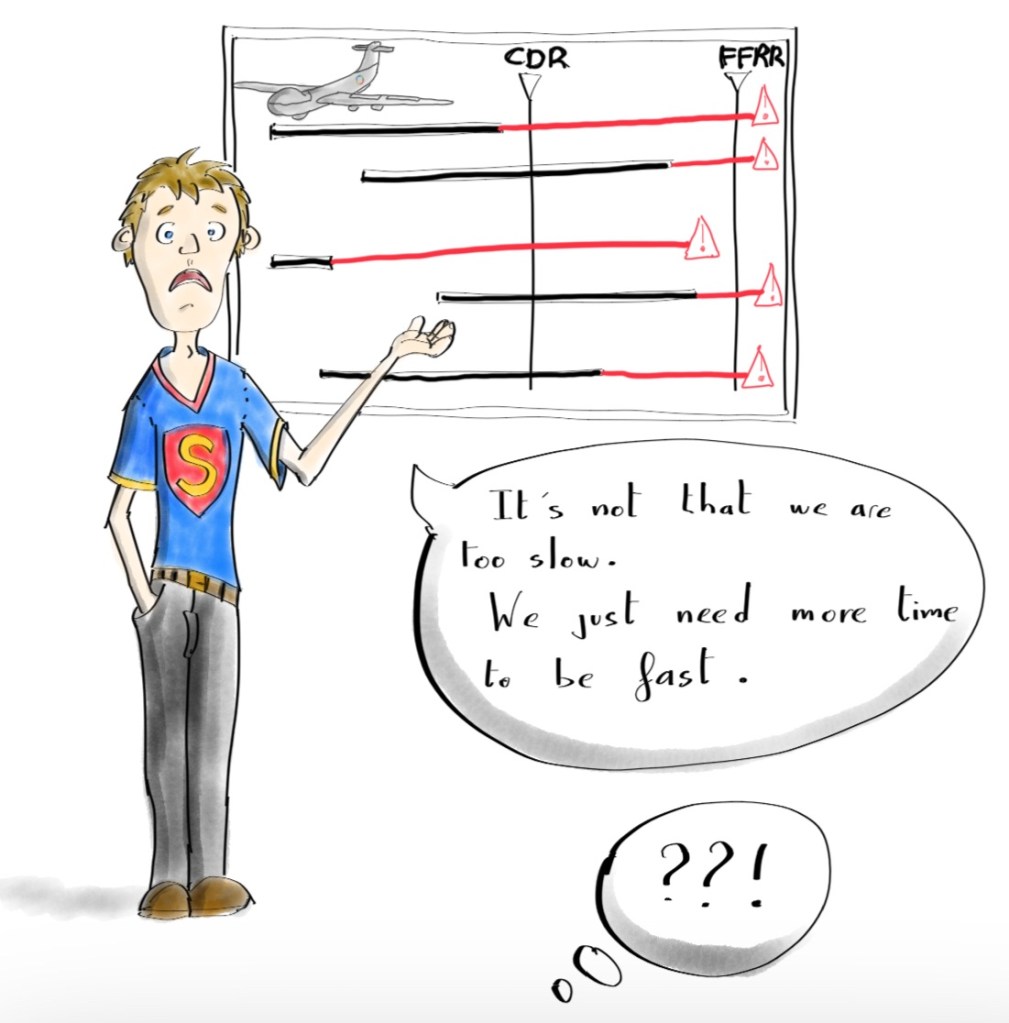
Ce n‘est pas que nous sommes lents, nous avons besoin juste plus de temps pour être rapide.
It‘s not that we are too slow, we just need more time to become fast.
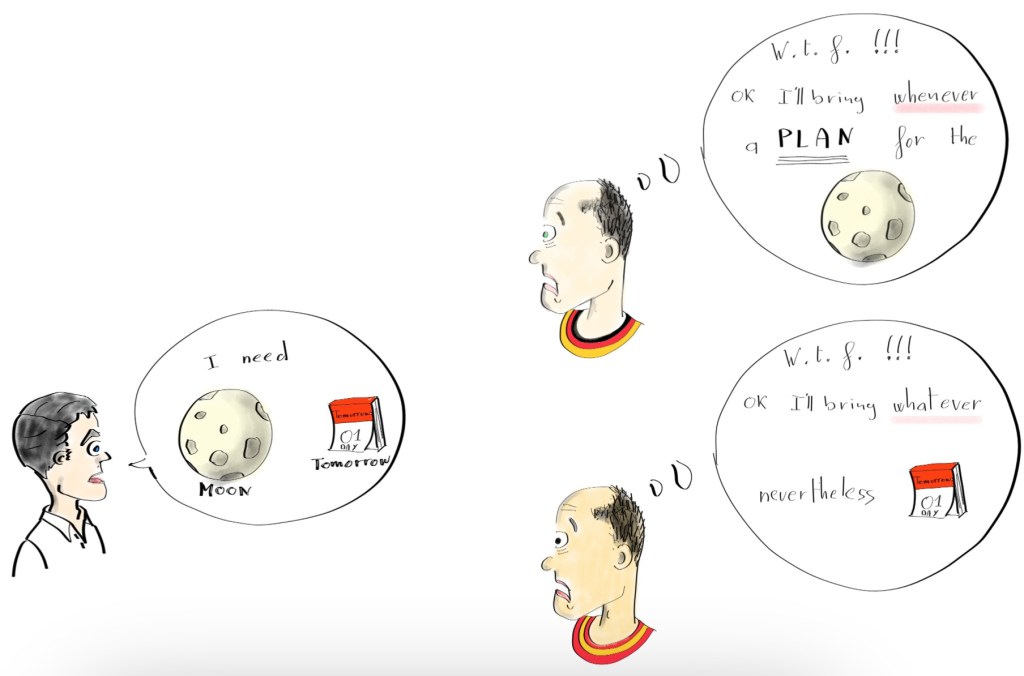
In all cultures, we are confronted with impossible requests from the hierarchy. It is interesting to note, however, that this does not generate the same behavior across different nations.
Here, I have illustrated a simplified comparison between a typical German employee and a typical Spanish employee.
In Germany, the focus tends to be on the “product” expected by the hierarchy. Everything else is considered a secondary outcome. Most of the time, facing the impossible request, we will just provide an impossible plan.
In Spain, the focus tends to be on meeting the deadline set by the hierarchy. Everything else is considered a secondary outcome. Consequently, at the requested time, we will deliver a result very far from the expectations.
Let’s imagine life as walking on a rope.
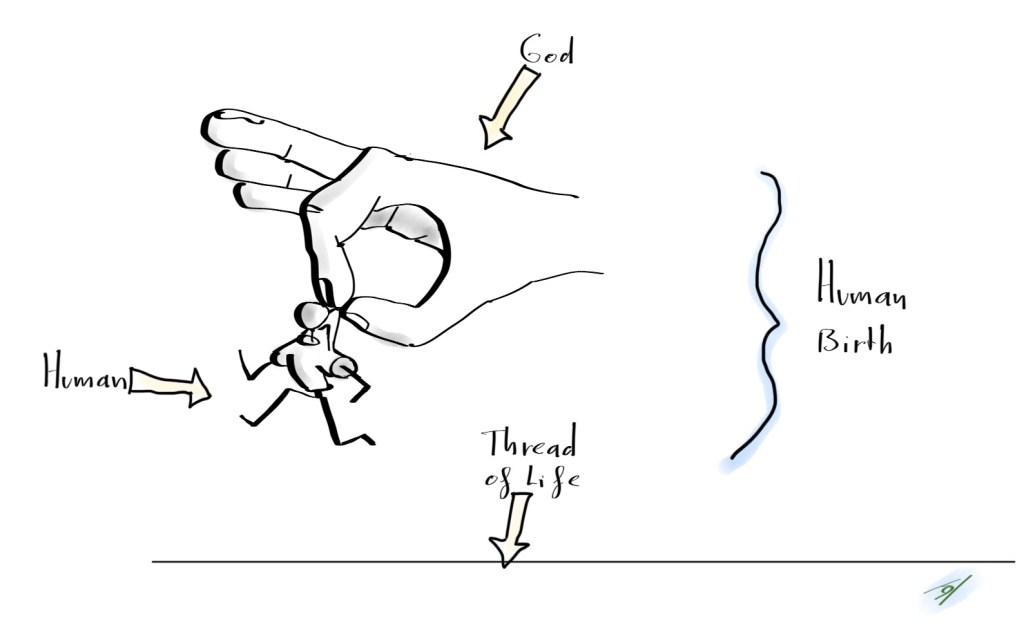
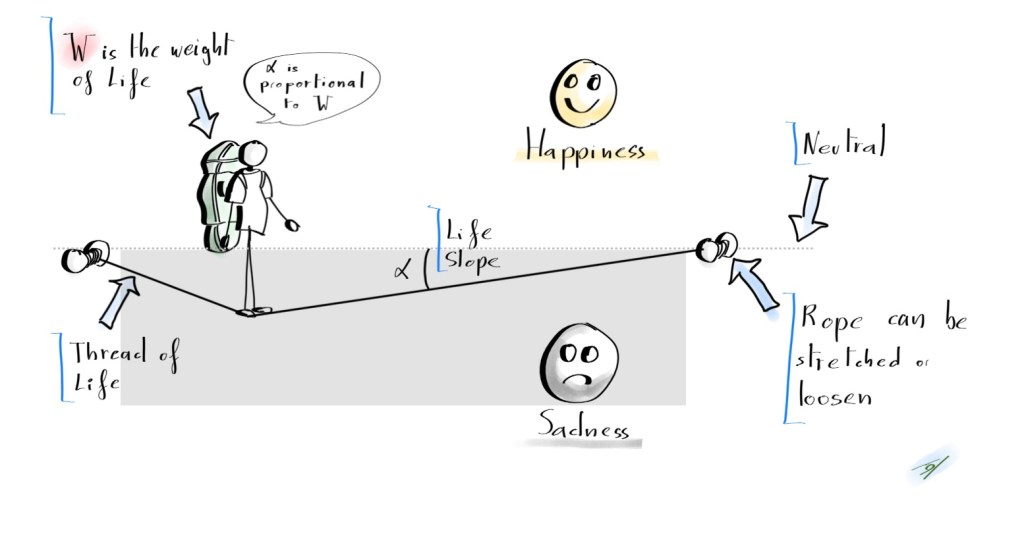
At the beginning, this rope is perfectly balanced between happiness and sadness.
Each of us carries a backpack, and life constantly adds things to it, making the walk increasingly difficult. The deeper we sink into sadness, the harder the path becomes, increasing the slope of our journey.
At some point, the rope can break—that’s the end. This means we cannot descend into misery indefinitely; we all have a limit. However, this limit is different for each of us.
Now, imagine we are like a little ball rolling on this rope. Let’s explore the different ways we can experience joy.
The first way is through a simple moment of joy. It could be watching the delighted face of a child tasting ice cream for the first time or receiving a thoughtful gift on your birthday. In these moments, the pleasure temporarily eases the weight you’re carrying. The “jump” you experience is small, and when you land back on the rope, you simply continue your journey as before.
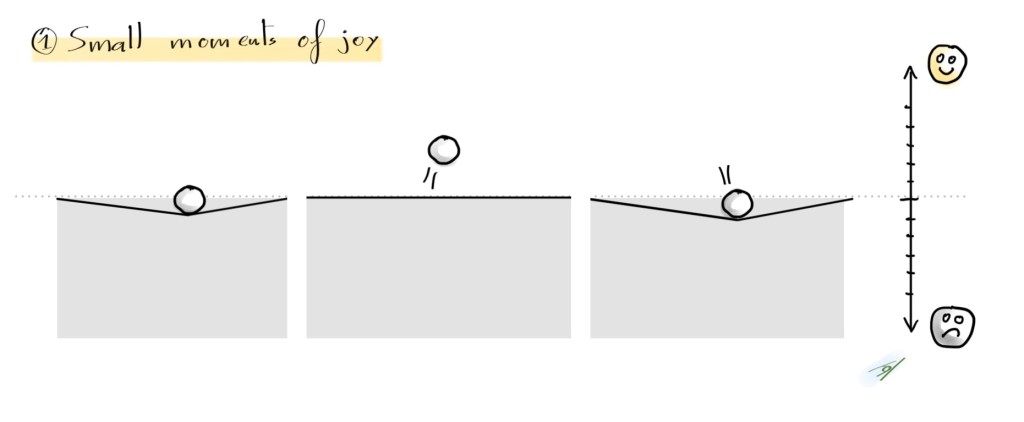
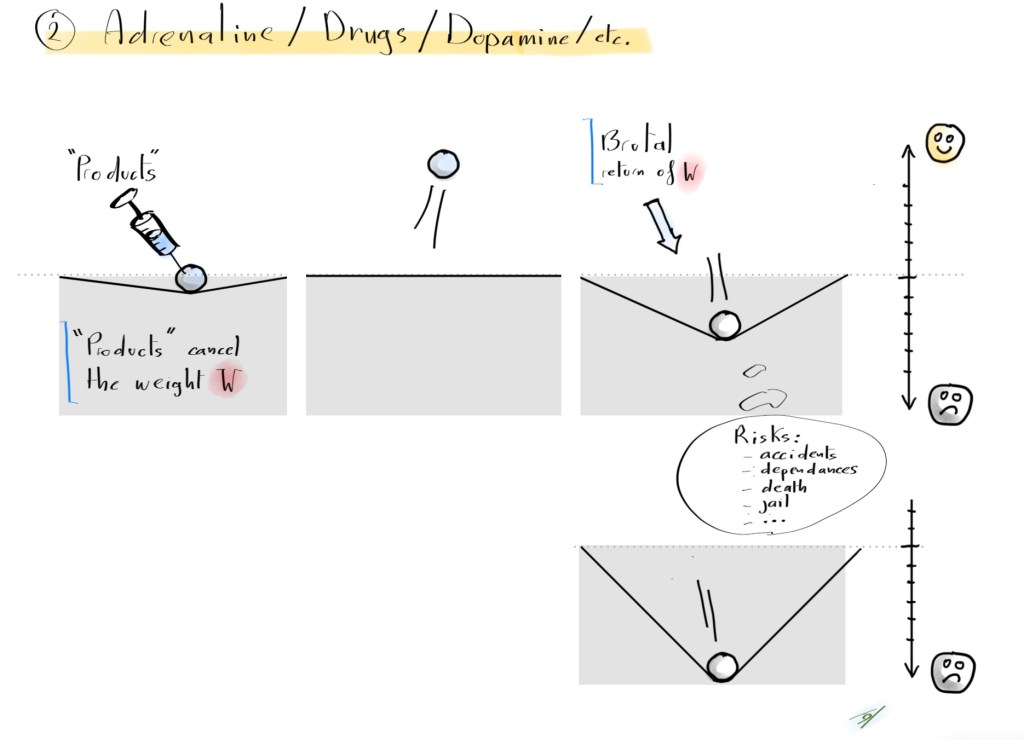
Now, there are also more powerful sources of pleasure or joy. These often involve adrenaline, dopamine, or various substances you can inject or consume. The principle is the same as before, but in this case, the “jump” is much higher. While the effect lasts, the weight of life feels nonexistent—or perhaps like walking on the moon.
However, the higher you jump, the harder you crash back into reality, often leading to a longer depressive period. Additionally, the higher the jump, the greater the risks. Adrenaline can lead to accidents, and substances can result in dependency or addiction.
If this happens, you may find yourself sinking even deeper into the darker side of life.
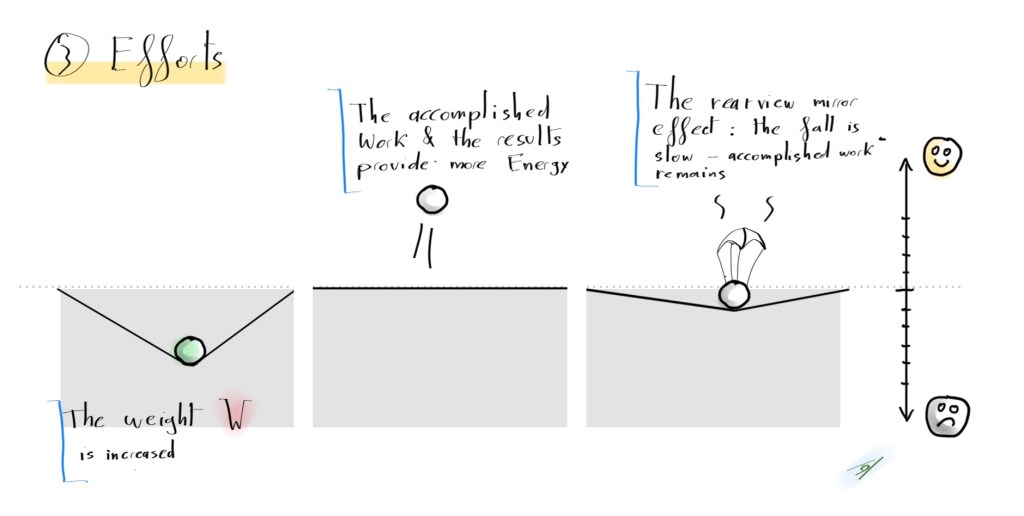
Another source of happiness comes from effort. Again, the principles are similar. This time, you intentionally push yourself, enduring the pain of effort to move a little further toward the enjoyable side of life. However, this is an investment. All those efforts are eventually transformed into energy once they’re accomplished.
In this case, your “jump” will be quite high, and the best part is the “rearview mirror” effect—you’ll continue to feel the pleasure of your achievement long after it’s done. As a result, the landing will be soft, and you won’t experience any “comedown.”
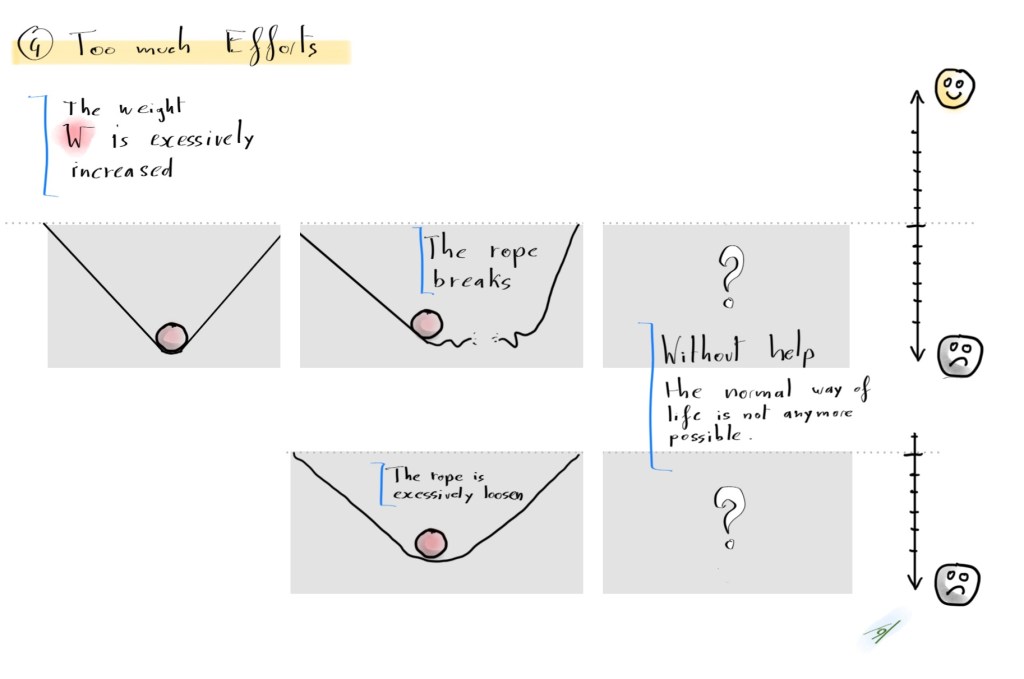
Of course, everything has its limits, and the results of your efforts are not always proportional to the effort itself. In such cases, the rope can break, leading to what we call a “burnout.” Alternatively, if you’re “strong enough” to avoid breaking, you might not experience a burnout, but you’ll remain stuck at the bottom, unable to climb back up.
At this stage, everyone needs help to recover.
Let’s explore another category of pleasures, those that can be measured by the amount of hormones your body delivers to your brain.
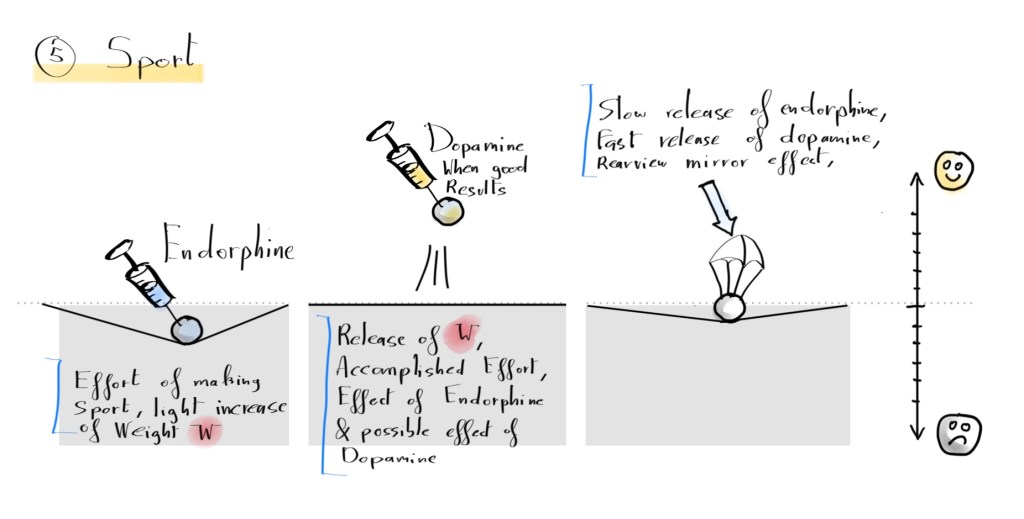
The first type of pleasure typically occurs when you engage in sports. In this scenario, two key hormones are involved:
• Endorphins: Released when muscles are activated beyond a certain threshold for a sustained period.
• Dopamine: Released when you enjoy achievements or good results in a competition.
The advantage of sports, even though it can also lead to a form of dependency, is that the release of endorphins tapers off gradually with continued effort, while dopamine benefits from the “rearview mirror” effect, prolonging the feeling of satisfaction from your accomplishments.
As a result, the overall “comedown” effect is relatively mild.
The other hormones involved are:
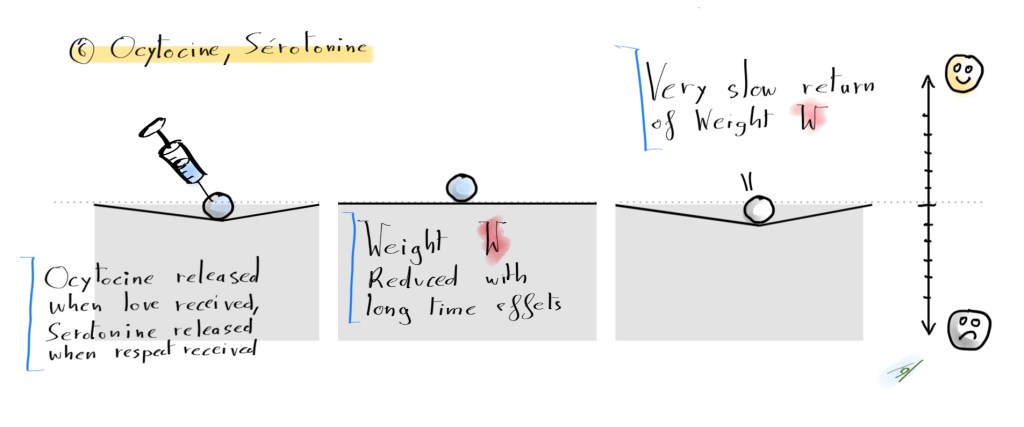
• Oxytocin: Released when you receive love.
• Serotonin: Released when you feel respected.
In these cases, we cannot really talk about a “jump,” at least not a very significant one. However, for a relatively long period of time, these hormones help to lighten the weight of life, providing a sense of relief and balance.
In my view, life is complex and multifaceted, so you should embrace all kinds of ways to enjoy it. The key is to remain conscious of what you are doing and the choices you make.
In french: Un mouchoir dans la poche
One morning, the professor enters the lecture hall, which is particularly noisy that day. He approaches the group making the most noise.
The professor interrupts the argument: “What’s happening here?”
A student standing back: “Yesterday, a girl was raped on campus. It was a gang of drunk and drugged guys who did it.”
The professor: “All of you, please sit down. I think it’s important to understand something. Let me show you something.”
All students calm down and sit in the lecture hall, attentive to the professor.
The professor then takes out a pack of paper tissues from his coat pocket. He takes two and unfolds them on the desk in front of him.
“This, my dear students, is the simplified representation of two individuals’ propensity for sexual relations, or in simpler terms, their sexual appetites.
Yes, we are all different, yes, we shouldn’t make generalizations. However, to understand the world around us a bit better, let’s accept some simplifications for now.
Here’s our ‘male’.” The professor holds up high the tissue he’s holding by two corners.
“He’s quite basic. He is, so to speak, always ready for sexual relations. Of course, we’ll omit the phase of his life where his sex isn’t really usable. Let’s say before 14 and after 80 or death. So this tissue symbolizes a daily desire for sex for 66 years. For the curious ones, let’s say roughly 24,000 desires. We agree that this varies with age and individuals. Some might have 30,000 desires and others 10,000. We’re staying within the rough outline of our model.”
The students are now all attentive, even Charles, who couldn’t care less about psychology class. The professor continues:
“Now, let’s take ‘Madam’.” The professor places the first tissue on the table, taking care not to fold it.
“For ‘Madam’, well, it’s very different. First, I must specify that I’m now going to talk about a more mature lady and not a young maiden roaming the streets in search of her ‘male’. But we’ll come back to young lovebirds later. And here again, I’m going to make big simplifications and caricatures. So don’t react to the approximations.
First, ‘Madam’ will be less willing during her period week. It’s more about technical problems of leaks, irritations, or pain than just a lack of desire. And I know that at the beginning and for some couples even after, this doesn’t stop them. But in general, one week out of four it’s ‘Nyet, nada, no way’. So…”
The professor tears off a quarter of the tissue and continues in front of the students who are beginning to understand where he’s going with this.
“Now, still omitting the first months of romantic passion, we arrive at routine. And there, of course, it’s also the fault of men who are no longer the gentlemen of yesteryear. Still, if we arrive at relations once a week, I’m not certain of the proportion of times when ‘Madam’ wants to be nice to her ‘male’. So let’s settle on one-seventh.”
The professor folds the tissue in seven then tears it to keep only the smallest part.
“Then, life. ‘Madam’ has conditions, expectations which, if not met, will send her libido down to her socks. What proportion? It’s very complicated, but we need to see this in the perspective of comparing our tissues. Let’s take minor illnesses. That’s about the same for a woman and a man. But the ‘male’ is much less particular. If ‘Madam’ has a cold, ‘so what?’. The reverse isn’t quite true. Then come all the arguments, children, mother-in-law, and finally and most importantly, the male’s stupid behavior. This last category is perhaps the most important.
For my part, I think that all of this combined, we’re going to reduce our tissue again to keep a quarter.”
After tearing the tissue one last time, which he holds high with one hand, he places it next to the large unfolded tissue that remained on the desk.
“So here’s the very approximate representation of ‘Madam’ and ‘Sir’s’ propensity for sexual relations in their life. Let’s leave these tissues on the table for two minutes.
A certain number of years ago, researchers conducted an experiment on rats. They took a rat and put it in a cage with a kind of button. For experiment 1, when the rat presses the button, a defined and constant ration of food falls into the cage. In this case, the rat continues its life normally. Now, the researchers changed the setup and this time the button is connected to a random food distribution system. So, sometimes it will get food and sometimes not. This random dimension resulted in the rat constantly pressing the button and especially eating to become obese. This experiment is used in many works to explain addiction problems or is even used in certain industries, like video games, to create addiction.
Now, let’s go back to our two tissues. Even if the proportions aren’t exact and in some cases might be less, it’s important to know that in many other cases they will be even worse. So you have a ‘male’ with his tissue sticking out everywhere, the rat, and ‘Madam’ from whom really not much sticks out, the food.”
“To you, ‘ladies’. You feel that for millennia you’ve been prey or mere pieces of meat? This isn’t likely to change unless we change human nature or our society. You must continue to fight to ensure that the animal, the rat, which is in many men, doesn’t have the right or opportunity to come out and gorge itself.
To you, ‘males’. You are all very different but you all have a tissue sticking out in your pants. Some will easily manage to fold it so that it’s not bigger than your partner’s small piece of paper. But others will suffer because the tissue is too big and no one can fold a paper more than 7 or 8 times. It’s a physical law. Consequently, you’ll have to find other solutions or get help.
This exercise is all the more complicated because you’ll have periods of great emptiness in your life. The most obvious will be all those moments when you’ll be alone and you’ll fill this void by using pornography to excess, even beyond your tissue reserve. Another is more painful: young lovebirds often at the beginning will have the impression, due to the number of occasions or the power of passion, that they have similar tissues and everything will be fine. But time will move forward and savage reality will take back its rights.
So you’re right, we have a strong propensity to be big pigs. But society, morality, reason, and education have managed to contain this frustration.”
Francais: Je sais que je ne sais pas
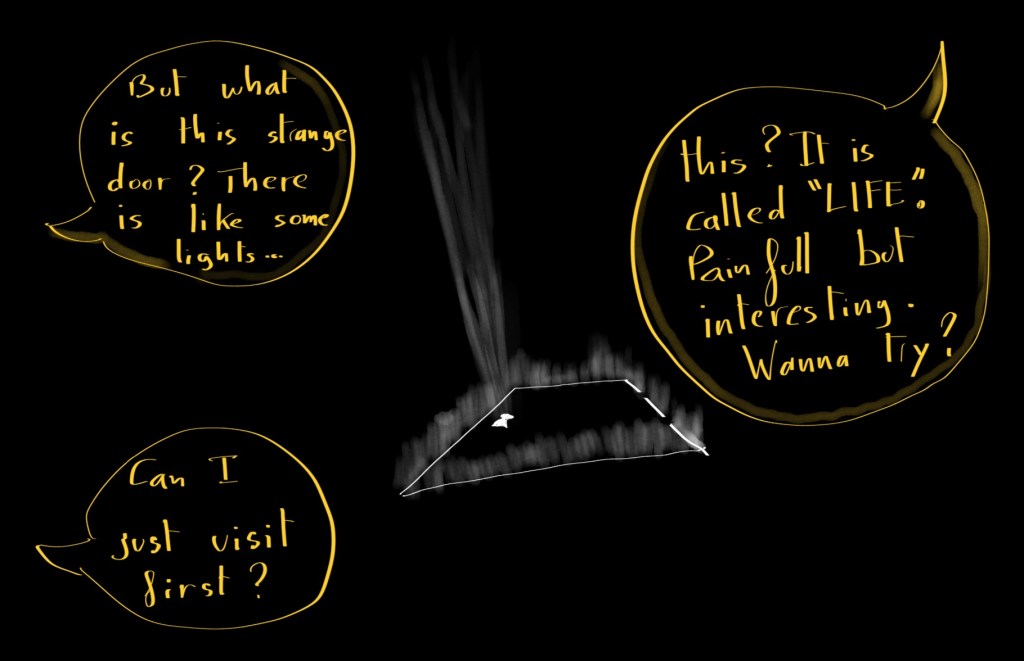
Dans l’immensité, un élève et son maître échangent:
– L’élève: Mais quelle est cette étrange porte? Il y a comme de la lumière.
– Le maître: Ça? C’est se qu’on appelle la VIE. C’est douloureux mais intéressant. Tu veux tester?
L’élève un peu peureux lui répond: Puis-je seulement visiter?
In the vastness, a student and his master converse:
– The student: But what is this strange door? There seems to be light.
– The master: That? It’s what we call LIFE. It’s painful but interesting. Do you want to try?
The student, slightly fearful, responds: Can I just visit?
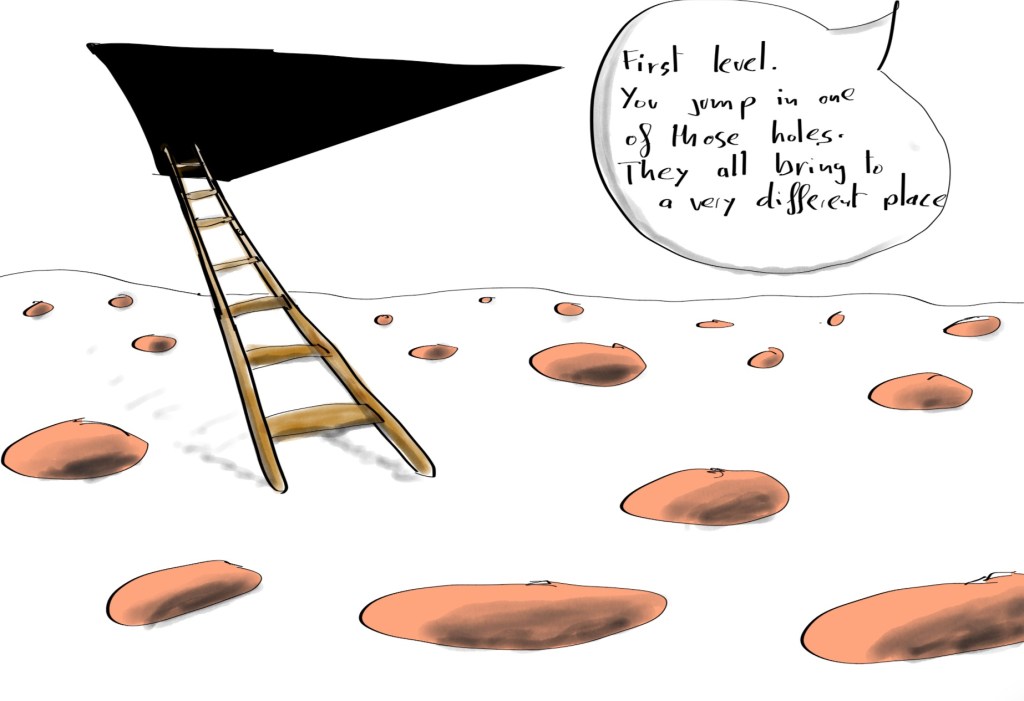
Alors les deux aventuriers s’enfoncent de l’infini indéfini vers le fini défini.
Une longue échelle de bois leur permet de descendre vers un sol immaculé sur lequel une infinité de trous, comme des sortent de tunnels, attend paisiblement.
Le maître commence alors la visite: Ici c’est le premier niveau. Tu sautes dans un de ces trous. Ils mènent tous à un endroit très différent.
So, the two adventurers venture from the undefined infinite toward the defined finite.
A long wooden ladder allows them to descend toward an immaculate ground, where an infinity of holes, like tunnels, patiently awaits.
The master begins the tour: Here is the first level. You jump into one of these holes. They each lead to a very different place.
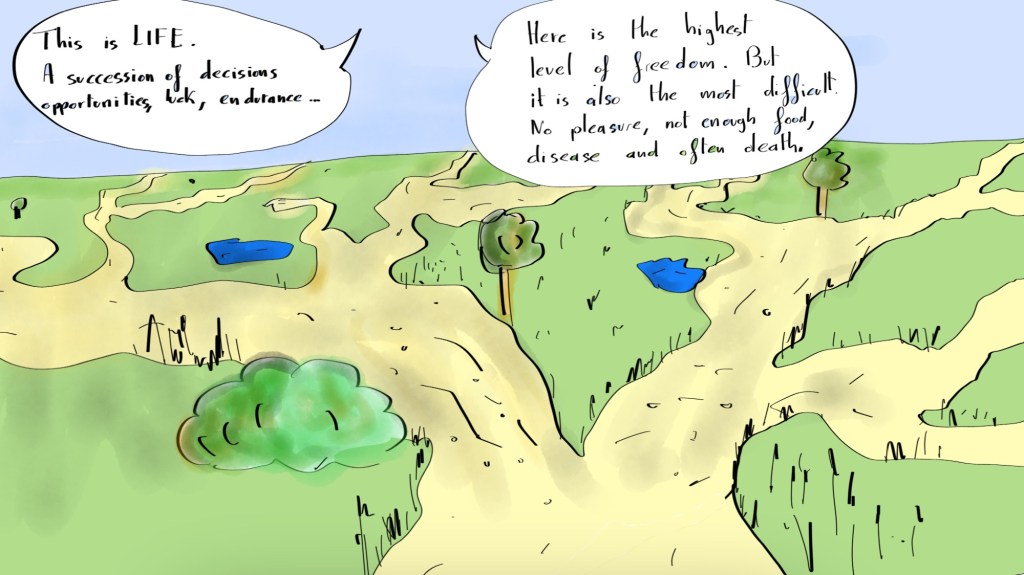
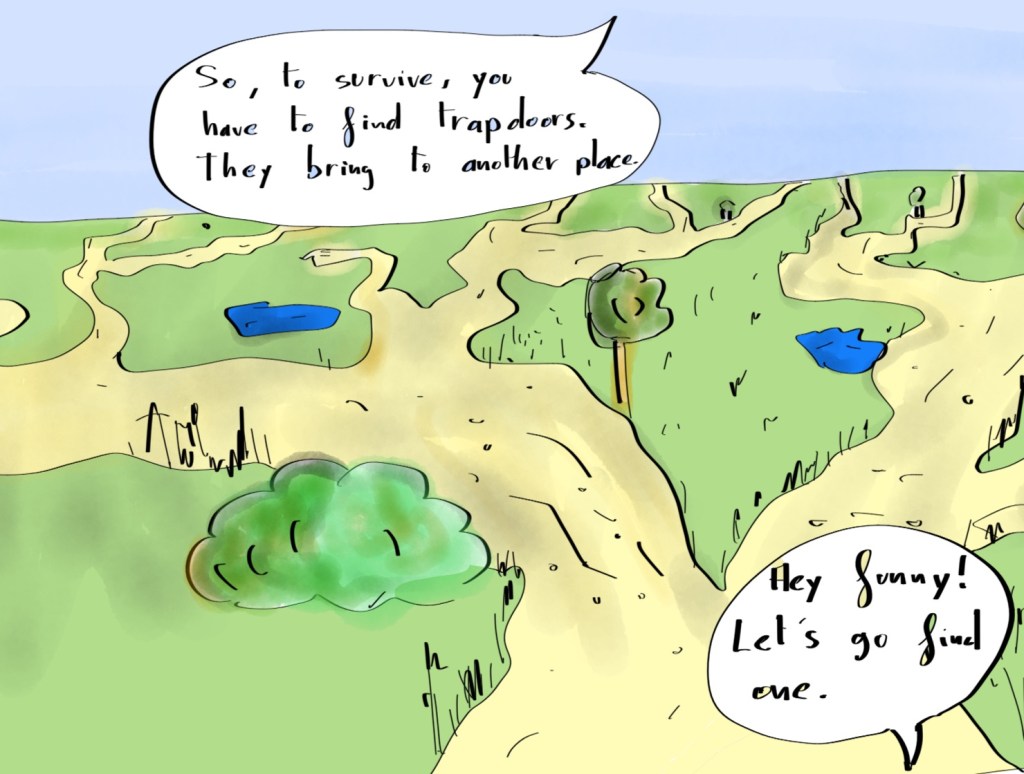
Une fois descendus dans un des tunnels, ils arrivent devant une étendue immense pleine de chemins et de prairies.
Le maître continue alors: Cela est la VIE. C’est une succession de décisions, d’opportunités, de chances, d’endurance… nous sommes ici au niveau qui offre la plus grande liberté. Mais c’est aussi le plus dur. Sans plaisir, pas assez de nourriture, des maladies et souvent la mort.
Once they descend into one of the tunnels, they arrive at a vast expanse filled with paths and meadows.
The master continues: This is LIFE. It’s a series of decisions, opportunities, chances, endurance… we are at the level that offers the greatest freedom. But it’s also the hardest. Without pleasure, not enough food, diseases, and often death.
Alors, pour survivre, il faut trouver des trappes. Elles mènent à un autre endroit encore.
L’élève: Super, sympa. Allons en trouver une.
So, to survive, you must find trapdoors. They lead to yet another place.
– The student: Great, cool. Let’s find one.
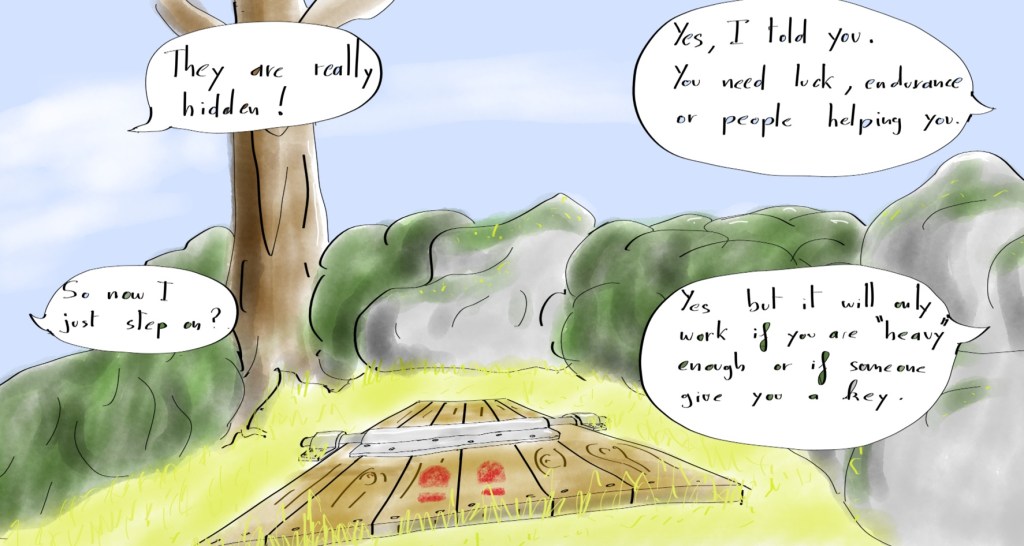
Après de longues heures à flotter pour trouver une de ces portes cachées:
L’élève: elles sont vraiment bien cachées.
Le maitre: Oui, je t’avais prévenu. Il faut de la chance, de l’endurance ou encore des gens qui vous aident.
L’élève: et donc maintenant, il suffit de monter dessus?
Le maitre: oui, c’est ça, mais ça s’ouvrira à la seule condition que vous soyez assez lourd ou encore si quelqu’un vous donne une clef.
After long hours of floating in search of one of these hidden doors:
– The student: They’re really well hidden.
– The master: Yes, I warned you. It takes luck, endurance, or even people to help you.
– The student: So now, we just stand on it?
– The master: Yes, that’s it, but it will only open if you’re heavy enough or if someone gives you a key.
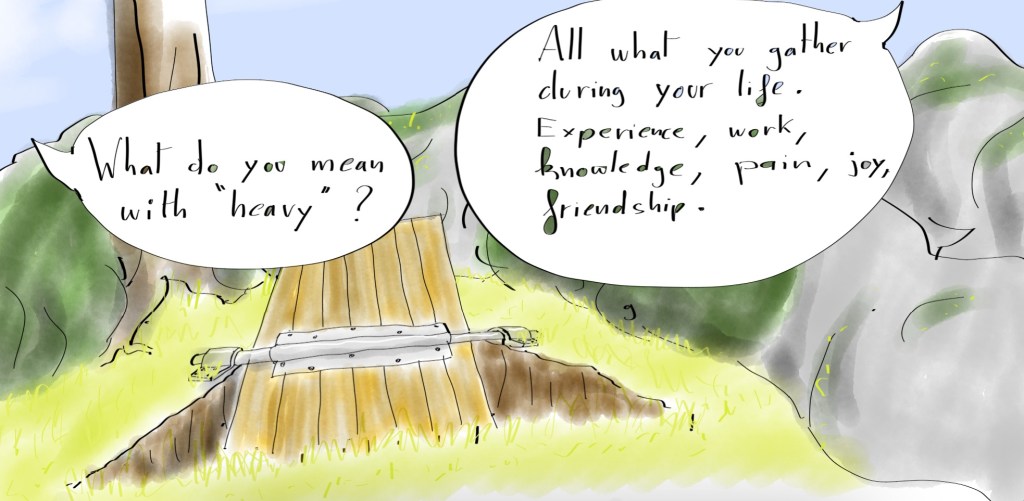
L’élève: mais que voulez vous dire par assez lourd?
Le Maitre: je parle de tout ce que vous amassez pendant un vie. Cela peut être l’expérience, le travail, la connaissance, le savoir-faire, la souffrance, la joie, l’amitié.
– The student: What do you mean by “heavy enough”?
– The master: I’m talking about everything you accumulate in life. It can be experience, work, knowledge, skills, suffering, joy, friendship.
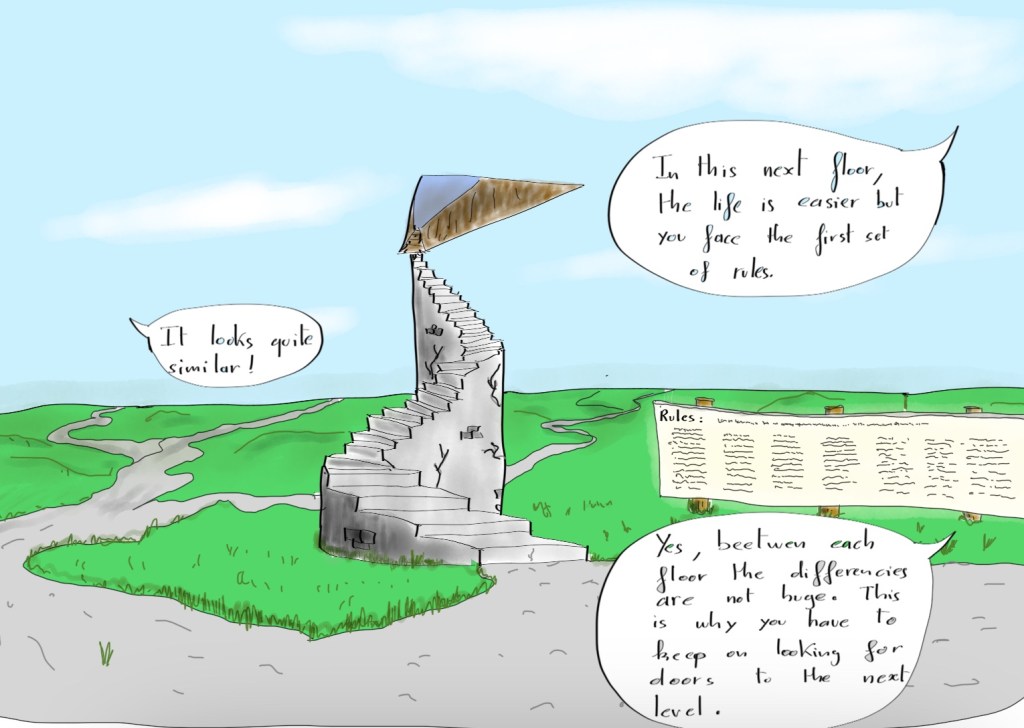
Le maître: maintenant, nous nous trouvons à l’étage suivant où la vie est plus facile mais où vous faites face au premières règles.
L’élève: oui mais, ça ressemble fortement au monde précédent.
Le Maitre: certes, entre les niveaux les différences sont légères. C’est pourquoi, entre autres, il faut continuer à rechercher des portes secrètes pour atteindre les prochains niveaux.
– The master: Now, we find ourselves on the next level, where life is easier but where you face the first rules.
– The student: Yes, but it looks a lot like the previous world.
– The master: Indeed, the differences between levels are subtle. That’s why, among other things, you have to keep searching for secret doors to reach the next levels.
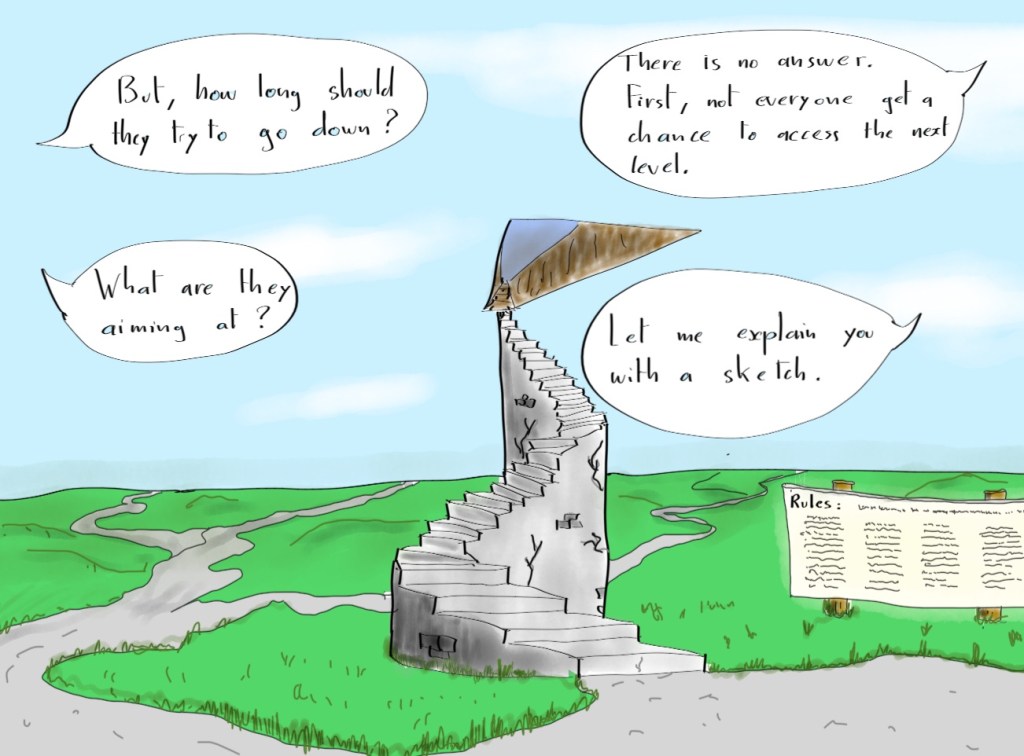
L’élève: mais pendant combien de temps faut-il essayer de descendre?
Le Maitre: il n’y a pas de bonne réponse. Il faut bien comprendre que peu de gens ont ne serait-ce qu’une chance d’atteindre le niveau d’après.
L’élève: oui mais finalement, tout cela mène a quoi?
Le maitre: laisse moi t’expliquer avec un petit schéma.
– The student: But how long do you have to keep trying to descend?
– The master: There’s no right answer. You must understand that few people even have the chance to reach the next level.
– The student: Yes, but ultimately, where does all this lead?
– The master: Let me explain with a little diagram.
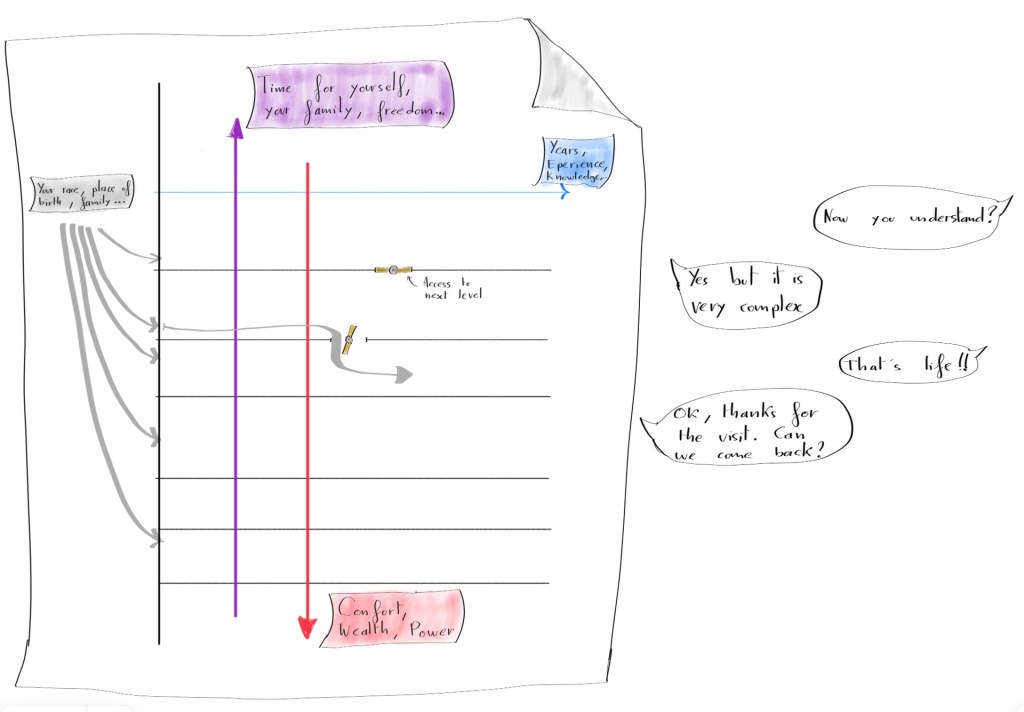
Le Maitre: tout d’abord, tout commence par le début. La race, le lieu de naissance et encore l’entourage définissent le niveau auquel on commence à la naissance. Ensuite, on évolue comme nous avons vu précédemment entre les niveaux. Et plus on descend, plus on a de pouvoir, de richesse et souvent de confort. Mais plus on est privé de liberté, de temps avec sa famille ou pour soi même.
Maintenant tout est clair?
L’élève: oui, mais c’est sacrément compliqué quand même.
Le Maitre: et oui c’est la vie!
L’élève: euh… ok. Merci pour la visite. On peut partir maintenant.
– The master: First, everything starts at the beginning. Race, birthplace, and surroundings determine the level at which you begin at birth. Then, as we’ve seen, you progress between levels. The further down you go, the more power, wealth, and often comfort you gain. But the more you’re deprived of freedom, time with family, or time for yourself.
Now is everything clear?
– The student: Yes, but it’s really complicated anyway.
– The master: Yes, that’s life!
– The student: Uh… okay. Thanks for the tour. Can we leave now?
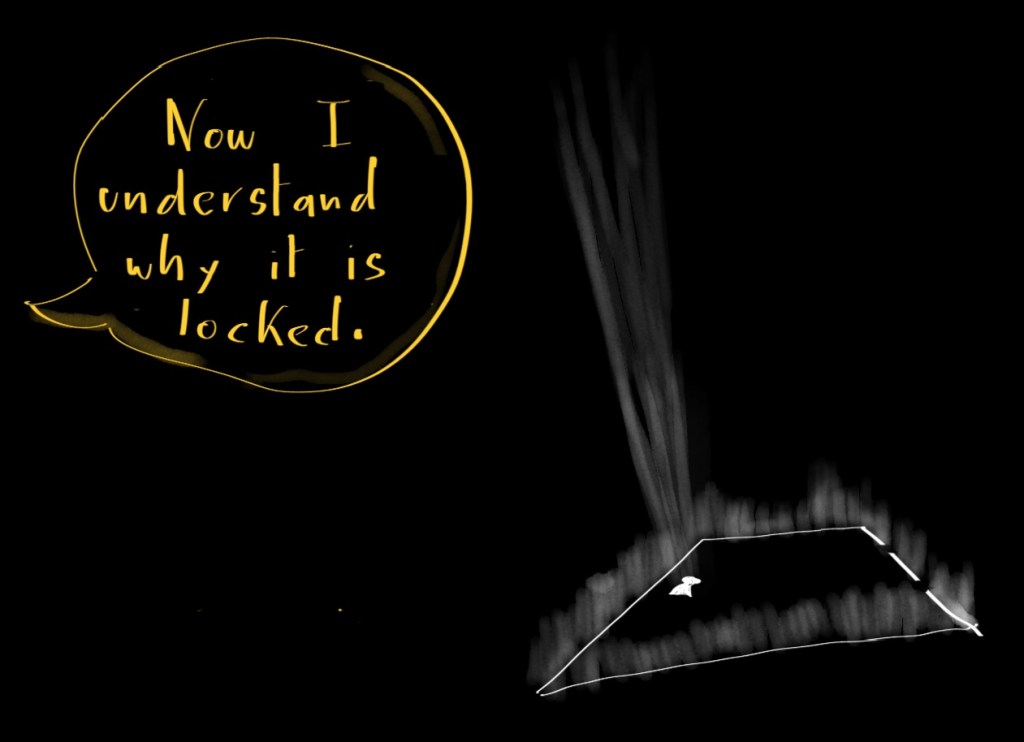
L’élève: maintenant, au moins je comprends pourquoi c’est fermé à clef.
– The student: At least now I understand why it’s locked.
Scier la branche sur laquelle on est assis…
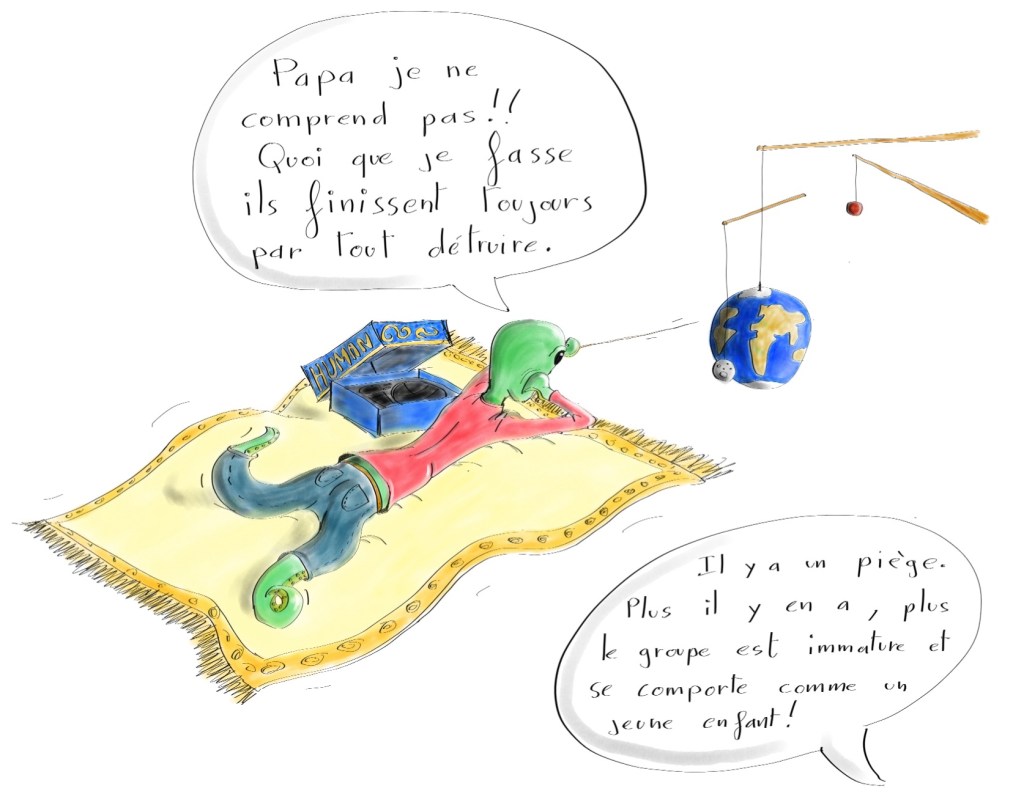
Young: “Dad, I don’t get it!! Whatever I try it always end up with them destroying everything.”
Answer: “There is a trap. The more they are, the less mature is the group and it then behaves like a young child!”
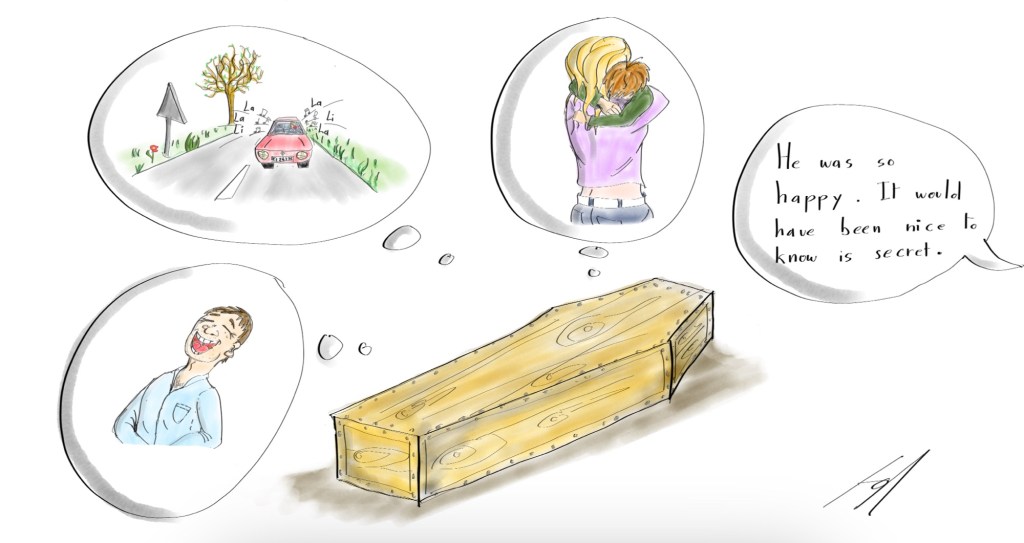
He would have answered: “Each day you will laugh once, you will sing once and love as much as possible”

 JoyB Draws & Dessine